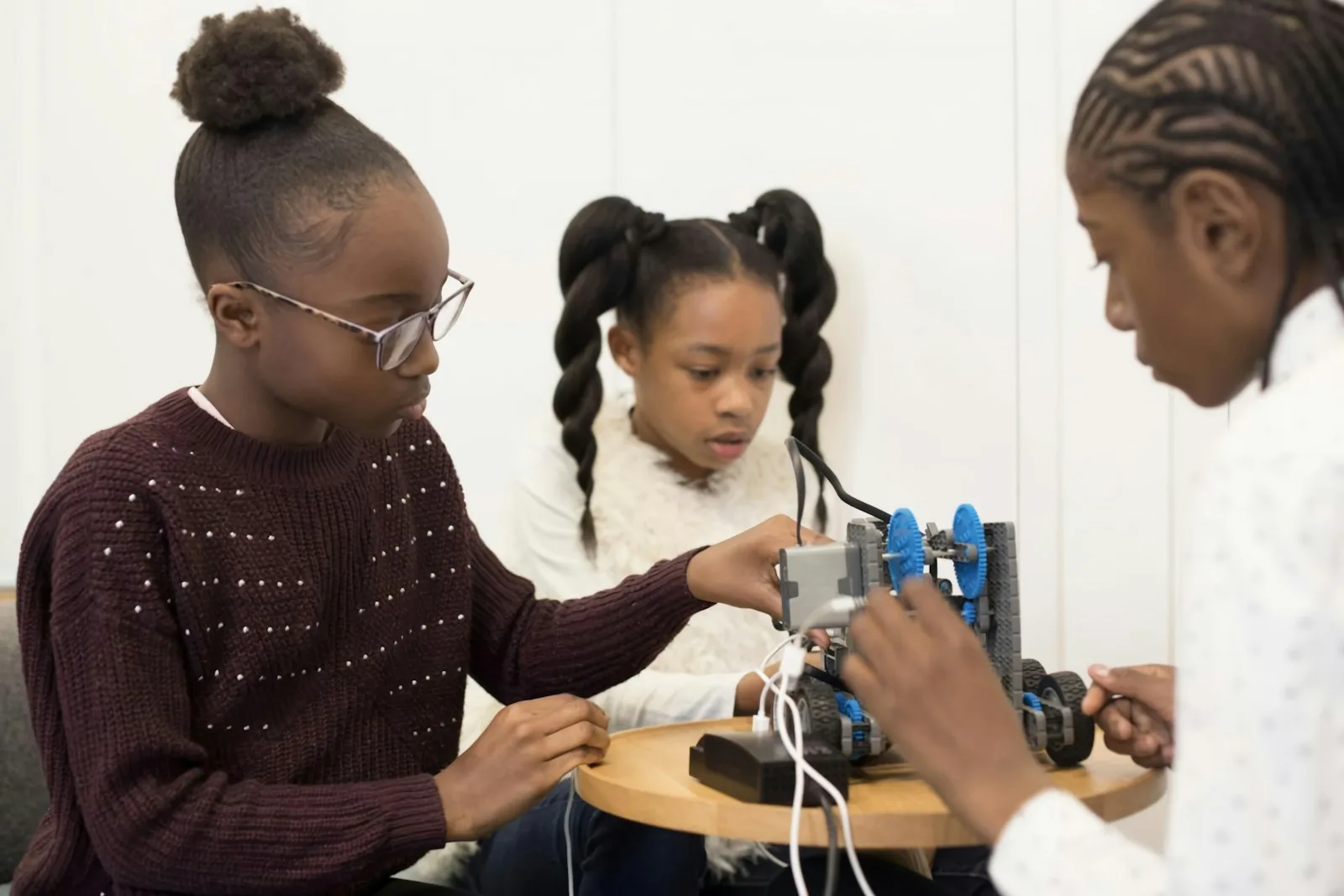
 Robotics · Bio
Hydro-Sense garden monitor
A solar-powered soil-moisture rig that texts the school garden team when the rooftop beds need water. Cut watering trips by half.
Maya R. & cohort HelixGrade 6
Lumina Academy is a project-based STEM and innovation school where students code, prototype, and ship real work, in small cohorts, guided by working engineers, scientists, and designers. Less worksheet, more workshop.
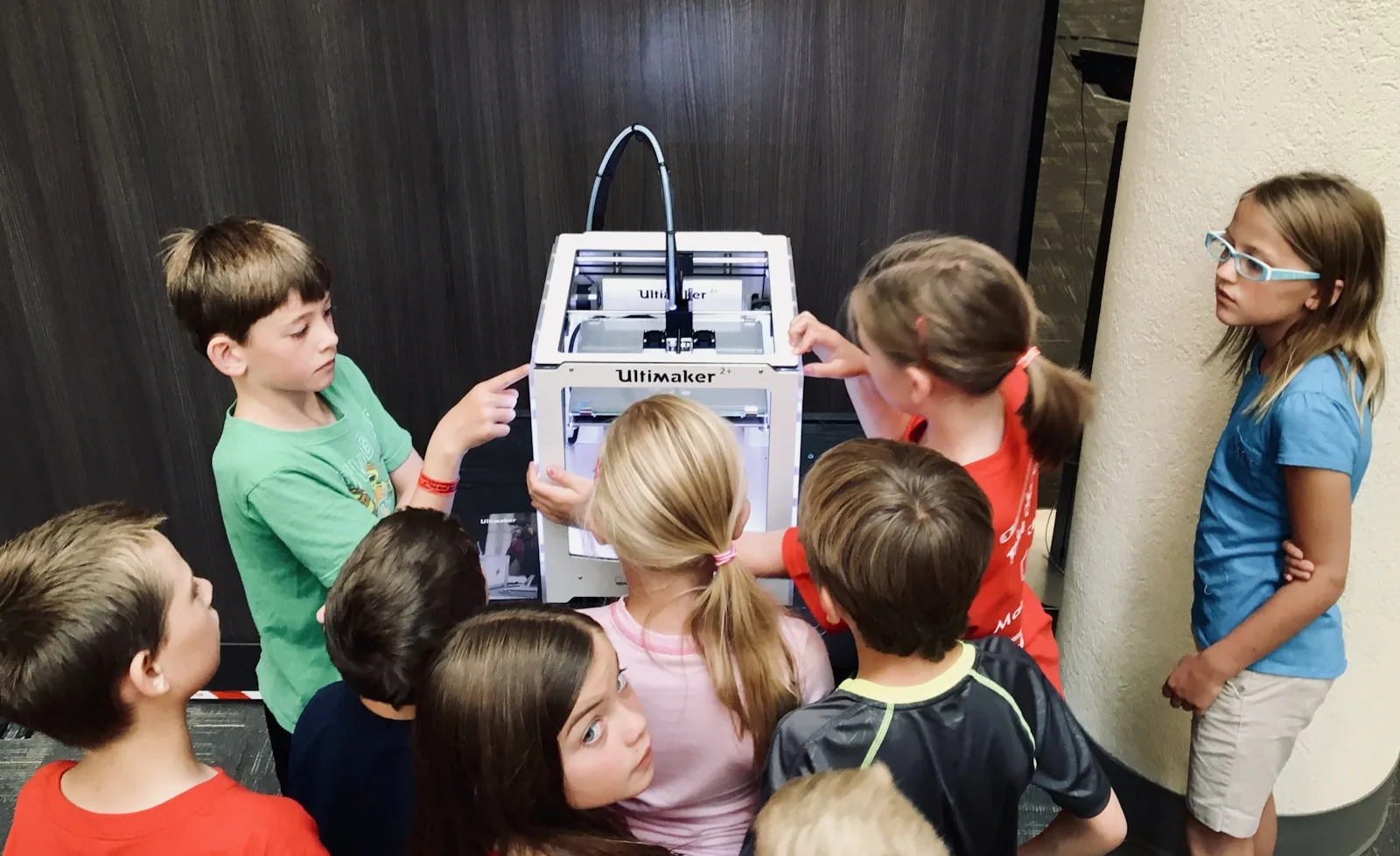 The fabrication lab, mid-print
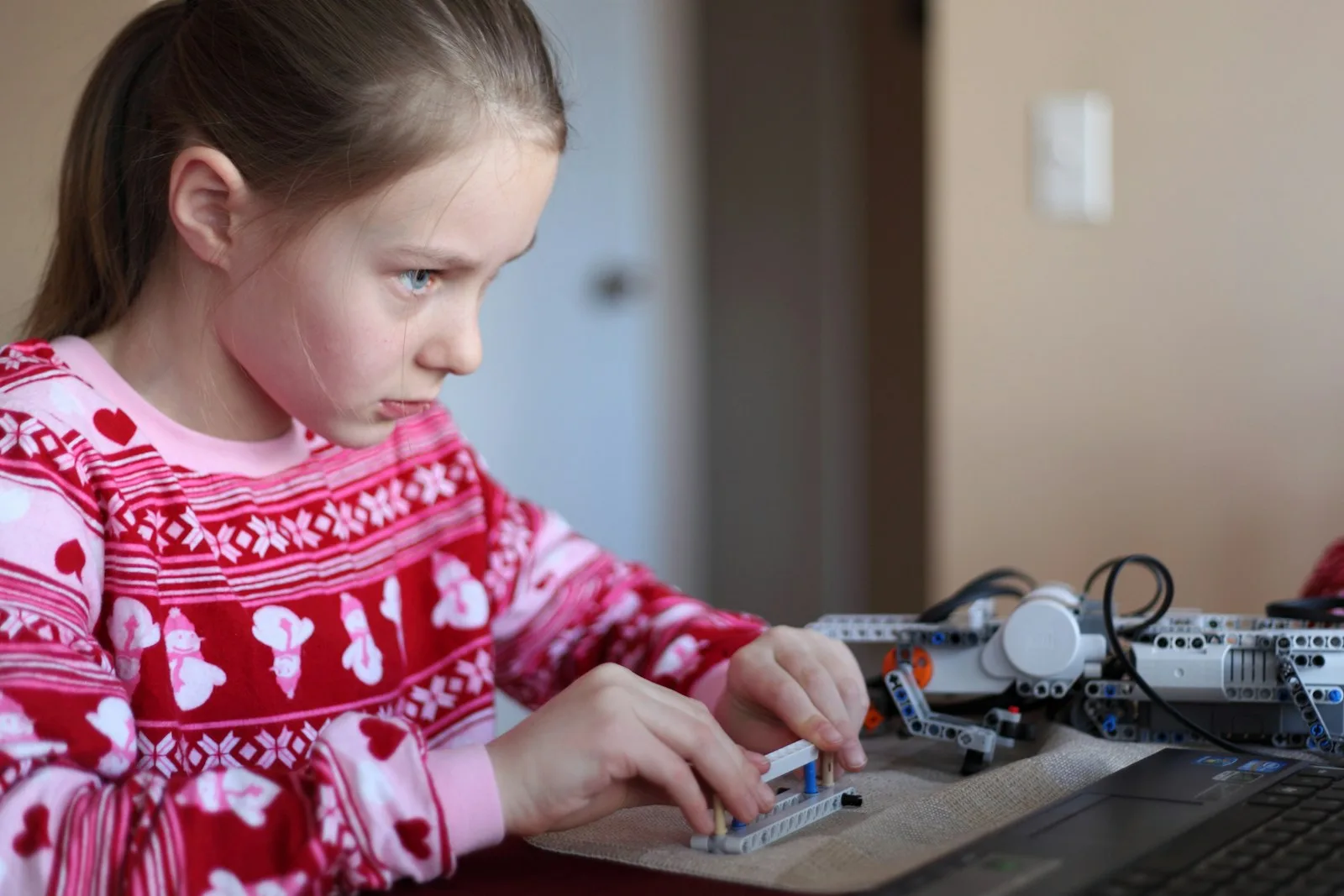 Robotics build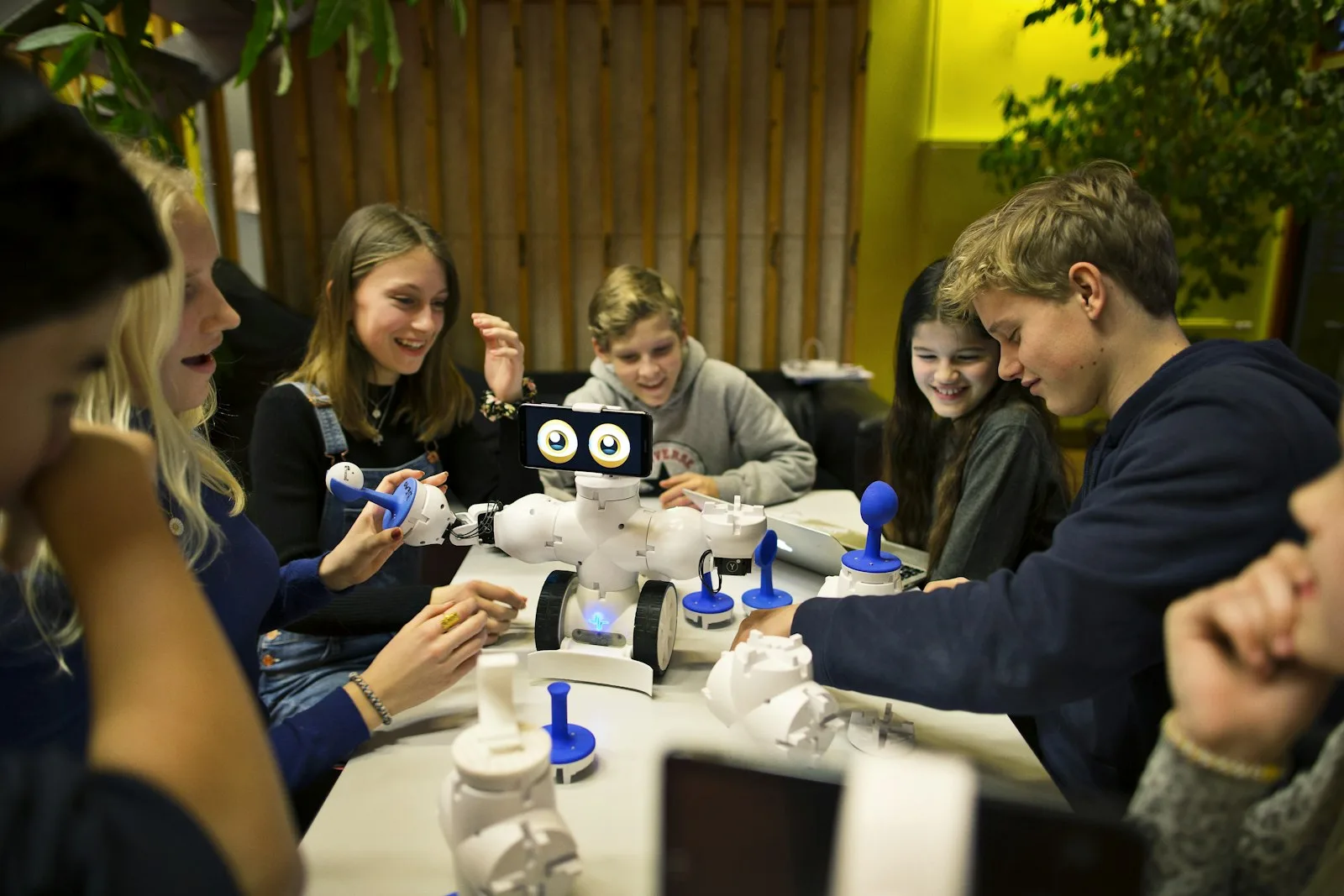


See what our students actually built this year.
See the projectsWe don't teach to a test. Students move through a four-phase build cycle on every project, the same loop working teams use to ship, so knowledge sticks because they used it to make something real.
A driving question, a real constraint, and a deadline. Students research, sketch, and define what they're actually trying to solve before they touch a tool.
Code, wire, cut, and 3D-print a first version fast. Failure is data here, every broken prototype is a build-log entry, not a bad grade.
Test with real users, measure, and rebuild. Educators coach the next version; peers run design critiques the way a studio does.
Every cohort ends on Demo Day. Students present a working build to families, mentors, and the public, and write up what they learned.
Students rotate through purpose-built studios, not classrooms with the desks pushed back. Each is stocked with real tools and run by a specialist who actually works in the field.
Grades 3–9
From first circuits to autonomous bots. Students wire, solder, and program machines that sense and move.
Grades K–9
Block coding to real Python and web apps. Every student ships software a human actually uses.
Grades 2–9
A real maker shop: 3D printers, a laser cutter, CNC, and hand tools, supervised, with full safety training.
Grades 4–9
Microscopes, sensors, and a rooftop garden. Students run experiments and log real environmental data.
Grades 3–9
Where ideas become drawings become things. Sketching, CAD, and structural problem-solving under constraint.
Grades 2–9
Engineers who can't explain their work get ignored. Students film, edit, and present every build.
A sample from last year's Demo Days. Every project starts with a question a student actually cared about and ends with something that works.
Robotics · BioA solar-powered soil-moisture rig that texts the school garden team when the rooftop beds need water. Cut watering trips by half.
Engineering · CodeA 3D-printed nose-cone payload logging altitude and acceleration, then graphing the flight in a web app the team coded.
Bio · MediaAn interactive map pairing recorded reef audio with species data, built to teach younger students about ocean health.
Code · DesignA browser game that drills multiplication through a pixel-art maze, coded in Scratch, then ported to JavaScript.
Fabrication · EarthA shredder-and-extruder build that turns the lab's plastic scrap back into usable 3D-printer filament.
Bio · CodeA 3D model of a plant cell you can walk through in the browser, with organelles students animated and narrated themselves.
Project-based doesn't mean unmeasured. We track core academics and the harder-to-fake skills employers and high schools actually look for.
96%
Families who'd recommend Lumina
120+
Student projects shipped a year
9:1
Student-to-educator ratio
40+
Partner mentors from local tech
Skills built into every cohort
Breaking real problems into solvable steps.
Designing, building, and debugging physical things.
Shipping as a team with real roles and deadlines.
Hypothesis, test, measure, revise, for real.
Presenting and defending your work on Demo Day.
Treating failure as data and iterating anyway.
Our educators are working engineers, scientists, and designers who chose to teach, credentialed, background-checked, and trained in project-based pedagogy.
Head of School
STEM education
Ed.D · former NASA education lead
Lead, Robotics & Electronics
Mechatronics
M.S. Robotics · 9 yrs industry
Lead, Code & Software
Software engineering
B.S. CS · ex-startup engineer
Lead, Fabrication Lab
Industrial design
MFA · certified shop instructor
Lead, Bio & Earth Lab
Environmental science
Ph.D · field-research scientist
Lead, Design & Media
Product design
B.Des · design-studio veteran
We admit on a rolling basis and look for curiosity, not a perfect transcript. The best first step is to come see the studios in action and meet the makers.
Fall cohorts fill by spring. We keep studios small on purpose, early inquiries get first placement.
Tell us your child's grade and what they're curious about. We reply within two school days.
Spend a morning on campus. Watch a cohort build, and let your child try a hands-on station.
Prospective students join a real cohort for a day, no test, just a project to dig into.
We place students in a multi-age studio and send a build-ready supply list. Done.
One number, billed in ten monthly installments. Lab consumables, 3D-printer filament, project kits, and Demo Day are all covered, no surprise fees.
Grades K–2
per month · 10 months
Grades 3–6
per month · 10 months
Grades 7–9
per month · 10 months
Need-based tuition assistance covers up to 40% for qualifying families. Sibling discounts apply. Ask admissions for the aid timeline.
Questions about fit, grade placement, or a studio day? Email our admissions team directly, a real person reads every message and replies within two school days.
Contact admissionsadmissions@luminaacademy.orgCampus
1400 Innovation RowBuilding C, The Maker HallAustin, TX 78702“My daughter went from 'school is boring' to building a moisture sensor for our garden at home. She finally sees herself as someone who can make things.”
“Demo Day blew me away. Eleven-year-olds presenting working projects, explaining trade-offs, taking questions. That's not a science fair, that's engineering.”
“The educators actually built things in the real world. My son asks his robotics lead questions I can't answer, and gets real ones back.”
Still curious? The fastest answer is a direct email, a real admissions person replies within two school days.
Contact admissionsLumina is a full-time, accredited independent school for grades K–9. Project-based STEM is the core of the day, not an add-on, and we cover the full academic spectrum through real projects.
Yes, woven into every project. A rocket build is also physics and math; a garden monitor is also writing and data literacy. We assess core academics continuously, just not with bubble sheets.
Not at all. Most students start with zero experience. Studios are multi-age and meet each maker where they are, the only prerequisite is curiosity.
We cap studios at a 9:1 student-to-educator ratio, with most cohorts around twelve students. Small groups are the whole point, every maker gets bench time and coaching.
Morning project blocks in the studios, a shared lunch and outdoor break, and afternoon build time, critique, or Demo Day prep. Less sitting, more making.
Email admissions with your child's grade, that's the whole first step. We'll set up a campus visit and a maker trial day. There's no entrance exam.